Stress, distractions, and constant deadlines can make it difficult to stay focused and productive. However, 5-minute mindfulness for professionals is an easy and effective way to reduce stress, sharpen concentration, and restore a sense of balance.
Scientific studies show that mindfulness improves cognitive function, enhances emotional regulation, and boosts decision-making. Even short mindfulness sessions can help professionals feel more grounded and focused throughout the day.
Common Workplace Stressors & How 5-Minute Mindfulness for Professionals Helps
Many professionals experience stress due to:
- Tight deadlines – Mindfulness strengthens focus and time management skills.
- Meeting overload – Taking mindful breaks improves attention span and reduces burnout.
- Digital distractions – Training your mind to stay present enhances productivity.
- High-pressure environments – Mindful breathing helps regulate emotions during stressful moments.
By setting aside just five minutes for mindfulness, you can create a healthier and more productive work routine.
5-Minute Mindfulness for Professionals: Quick & Effective Techniques
1. Box Breathing for Instant Calm
Box breathing is a controlled breathing technique that quickly lowers stress and improves mental clarity.
How to Do It:
- Inhale deeply through your nose for four seconds.
- Hold your breath for four seconds.
- Exhale slowly through your mouth for four seconds.
- Hold your breath again for four seconds before repeating.
- Continue this cycle for five minutes, focusing only on your breath.
Why It Works: Box breathing activates the parasympathetic nervous system, helping the body relax and reducing the effects of stress.
Best Time to Use It:
- Before a stressful meeting or presentation.
- During moments of anxiety to restore focus.
- As a quick reset between tasks.
For more breathing exercises, explore the Free Mindfulness Project , which offers guided breathing and meditation sessions.
2. The 5-4-3-2-1 Grounding Method
This technique uses the five senses to bring attention back to the present moment, reducing overthinking and improving focus.
How to Do It:
- 5: Identify five things you can see (e.g., a computer screen, desk, window, pen, or a cup).
- 4: Identify four things you can feel (e.g., your chair, clothing, keyboard, or a warm mug).
- 3: Identify three things you can hear (e.g., office chatter, typing, or an air conditioner).
- 2: Identify two things you can smell (e.g., coffee, hand lotion, or fresh air).
- 1: Identify one thing you can taste (e.g., a sip of tea, mint gum, or a snack).
Why It Works: This technique reduces anxiety by directing focus to the present, rather than future worries or past stressors.
Best Time to Use It:
- During high-pressure situations.
- When feeling overwhelmed by work.
- As a quick mental reset between meetings.
More mindfulness exercises can be found at Mindful.org , a site dedicated to practical mindfulness strategies.
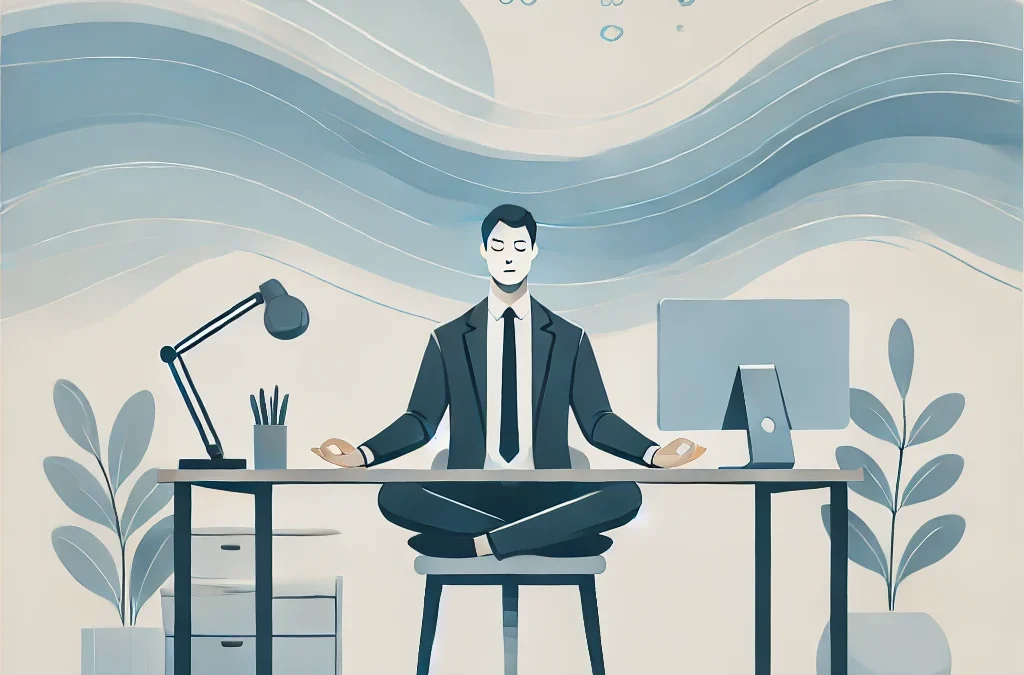
3. Desk Meditation (Mini Check-In)
A simple meditation that can be done at your desk to restore focus and calm the mind.
How to Do It:
- Sit comfortably with your back straight and hands relaxed.
- Close your eyes and take a slow, deep breath.
- Focus on your breath, noticing the air moving in and out.
- If your mind wanders, gently bring your attention back to your breathing.
- Continue for five minutes, then slowly open your eyes and return to work.
Why It Works: Desk meditation clears mental distractions and enhances focus, even during busy workdays.
Best Time to Use It:
- Between tasks to improve concentration.
- Before making important decisions.
- After a stressful conversation or email.
How 5-Minute Mindfulness for Professionals Can Become a Daily Habit
- Set reminders – Schedule short mindfulness breaks to build consistency.
- Pair mindfulness with existing habits – Take deep breaths while making coffee, practice gratitude before checking emails, or use mindful walking during commutes.
- Use mindfulness apps – Free apps like Headspace, Calm, and Insight Timer provide guided exercises for busy professionals.
Even small efforts lead to noticeable improvements in stress management, focus, and overall well-being.
Final Thoughts
Mindfulness doesn’t require long meditation sessions—just five minutes a day can make a difference. By integrating these exercises into your routine, you’ll enhance mental clarity, reduce stress, and boost productivity.
Which mindfulness technique will you try today?