In today’s fast-paced work environment, learning to manage workplace stress and stay productive is crucial for professional success and personal well-being. Workplace stress can significantly impact efficiency, focus, and overall job performance. However, with the right strategies, you can overcome these challenges and thrive in your career. This article explores effective techniques to manage workplace stress and stay productive while maintaining a sense of balance.
The Link Between Stress & Productivity
How Workplace Stress Lowers Efficiency
Excessive stress can have a detrimental effect on your ability to perform tasks efficiently. When under pressure, cognitive functions may become impaired, leading to decreased focus and increased errors. As a result, tasks that would typically take a short time to complete might drag on for hours, severely impacting productivity.
Signs That Stress Is Hurting Your Work Performance
Recognizing the signs of stress-induced productivity loss is the first step in addressing the issue. Common indicators include:
- Difficulty concentrating
- Procrastination and missed deadlines
- Feeling overwhelmed or unmotivated
- Physical symptoms such as headaches or fatigue
If left unmanaged, stress can significantly hinder work performance. That being said, recognizing these signs early allows you to take action before burnout sets in.
Proven Ways to Manage Workplace Stress & Stay Productive
Time Management Strategies to Reduce Stress
One of the most effective ways to manage workplace stress and stay productive is to implement solid time management techniques. To illustrate, start by prioritizing your tasks and focusing on one thing at a time. Single-tasking, rather than multitasking, allows your brain to concentrate fully, reducing stress and improving efficiency.
Another helpful strategy is to create a pre-work ritual. For example, you might write a to-do list, enjoy a nutritious meal, or engage in light exercise before starting your workday. Establishing a routine sets a positive tone for the day and prepares you mentally for upcoming tasks.
Mindfulness Techniques for Staying Focused Under Pressure
Practicing mindfulness is a powerful tool in reducing stress and improving job satisfaction. For instance, taking short breaks to practice deep breathing exercises can help reset your focus and lower stress levels. Additionally, stepping away from your desk for a moment and looking outside can provide mental clarity.
Another technique is reframing negative thoughts. Instead of dwelling on challenges, try to view them as learning opportunities. This simple mindset shift can help you manage workplace stress and stay productive, even in high-pressure situations. For more ways to prevent burnout and maintain well-being, check out our guide on The Best Daily Self-Care Habits to Prevent Burnout.
Creating a Work Environment That Supports Productivity
Your physical workspace plays a crucial role in managing stress and maintaining productivity. Therefore, keeping your desk organized and clutter-free can help reduce mental clutter and improve focus. In addition, consider incorporating calming elements such as plants or soothing artwork.
Building positive social connections at work can also reduce stress. Engaging in brief conversations with colleagues or participating in team activities can provide much-needed mental breaks and improve workplace morale.
Conclusion – Taking Control of Workplace Stress for Long-Term Success
Learning to manage workplace stress and stay productive requires commitment and consistency. By implementing time management strategies, embracing mindfulness techniques, and creating a supportive work environment, you can significantly reduce stress levels and boost productivity.
Additionally, prioritizing self-care is essential for long-term success. Taking regular breaks, engaging in physical activity, and ensuring adequate sleep will help you maintain focus and prevent burnout. To illustrate, small habits such as staying hydrated and stepping away from work periodically can have a profound impact on overall well-being.
By applying these strategies consistently, you’ll be better equipped to handle workplace pressures while maintaining high productivity levels. Don’t let stress hold you back—take control of your work life and create a healthier, more sustainable approach to professional success.
[Insert Internal Link Here]
For more information on the science behind stress and productivity, visit the American Psychological Association’s resource on workplace stress.
Meta Description: Discover effective strategies to manage workplace stress and stay productive. Learn time management, mindfulness techniques, and how to create a stress-reducing work environment.
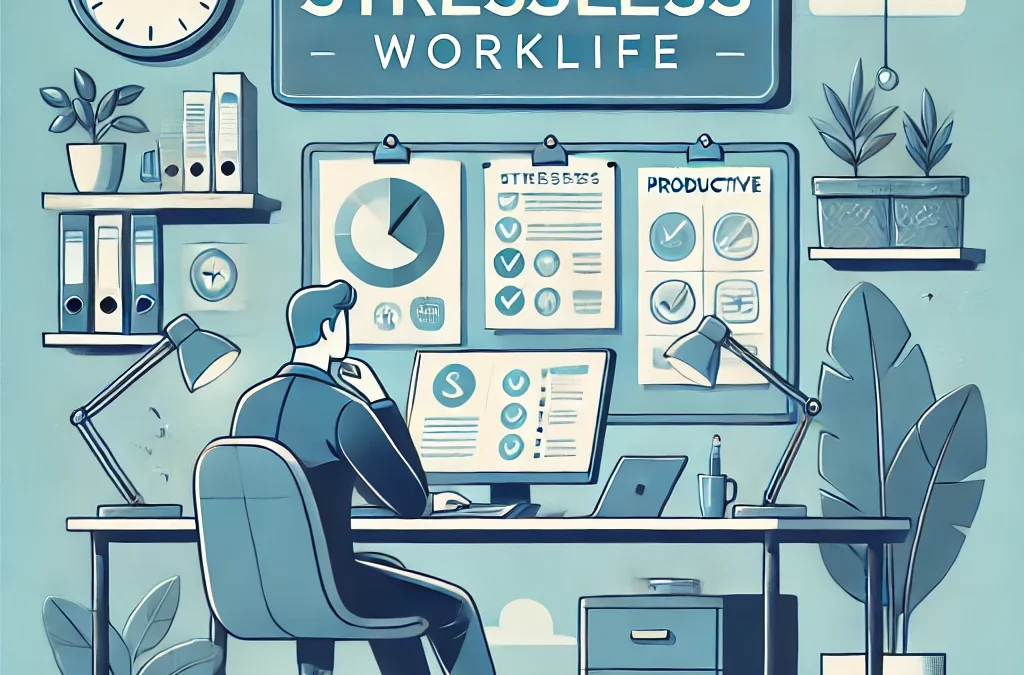
Image Alt Text: A professional managing workplace stress and staying productive while working at a desk in a calm, organized setting.