The workplace can be overwhelming, with tight deadlines, constant notifications, and high-pressure tasks. Without proper stress management, productivity declines, and burnout becomes a real risk. However, workplace mindfulness to reduce stress offers a powerful solution.
Mindfulness techniques have been scientifically proven to lower stress, improve focus, and enhance emotional well-being. Even short mindfulness exercises can help professionals regain control, stay productive, and feel more balanced throughout the day.
Why Workplace Mindfulness to Reduce Stress Is Important
Many professionals struggle with distractions, overwhelming workloads, and mental fatigue. Fortunately, workplace mindfulness to reduce stress can help by:
- Boosting focus and decision-making skills
- Lowering stress and anxiety levels
- Improving communication and teamwork
- Increasing emotional resilience and job satisfaction
By practicing mindfulness daily, you can develop better stress management habits and maintain clarity, even in high-pressure situations.
5 Effective Workplace Mindfulness Techniques to Reduce Stress
1. Mindful Breathing for Instant Calm
Mindful breathing is an easy and effective way to calm your nervous system and reduce stress within seconds.
How to Do It:
- Inhale deeply for four seconds, filling your lungs completely.
- Hold your breath for four seconds.
- Exhale slowly through your mouth for four seconds.
- Repeat this cycle for one to two minutes, focusing only on your breath.
Why It Works: Deep breathing lowers cortisol levels and promotes relaxation, helping you stay calm and focused.
⏳ Best Time to Use It: Before meetings, after difficult conversations, or whenever stress arises.
For guided breathing exercises, visit the Free Mindfulness Project , which offers free mindfulness resources.
2. The 5-4-3-2-1 Grounding Technique
This method shifts your focus away from stress and helps reconnect with the present moment.
How to Do It:
- 5: Identify five things you see (e.g., your desk, a window, a coffee mug).
- 4: Identify four things you feel (e.g., the texture of your clothing, the weight of your phone in your hand).
- 3: Identify three things you hear (e.g., office chatter, typing, background noise).
- 2: Identify two things you smell (e.g., coffee, fresh air).
- 1: Identify one thing you taste (e.g., a sip of water, gum).
Why It Works: This technique quickly interrupts anxious thought patterns and helps refocus your mind.
⏳ Best Time to Use It: During overwhelming workloads, before presentations, or when feeling mentally scattered.
More mindfulness techniques can be found at Mindful.org , a site dedicated to workplace mindfulness.
3. Desk Meditation for Mental Clarity
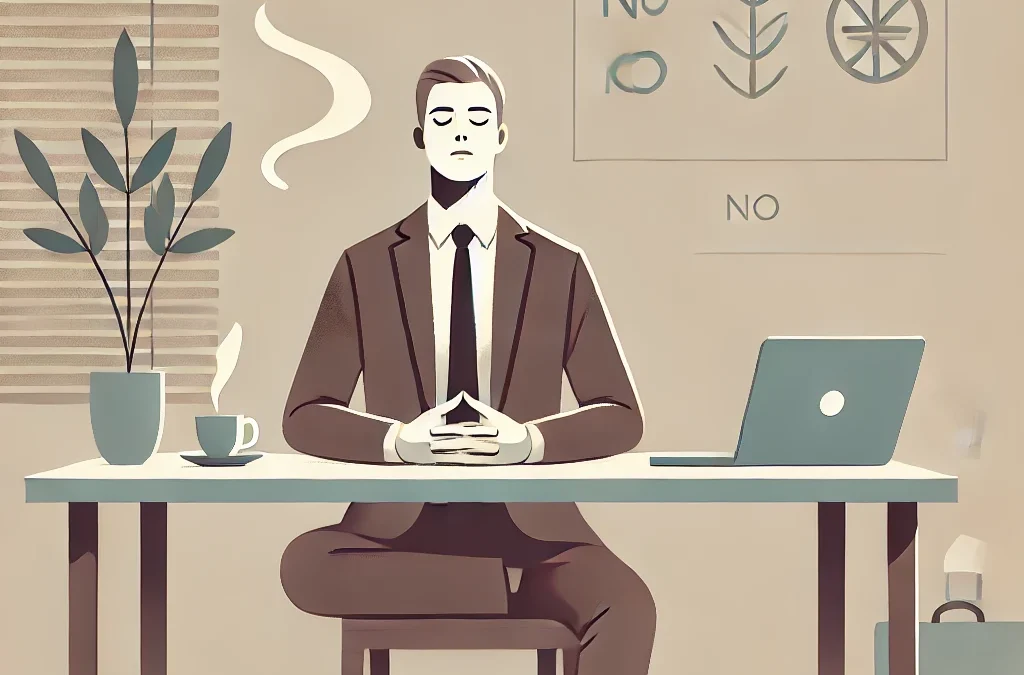
A short five-minute meditation at your desk can improve mental clarity and reduce stress instantly.
How to Do It:
- Sit comfortably and close your eyes.
- Take a deep breath and exhale slowly.
- Focus on the sensation of your breath entering and leaving your body.
- If thoughts arise, gently return attention to your breath.
- Continue for five minutes, then return to your work with renewed focus.
Why It Works: Meditation is proven to reduce work-related stress and improve focus.
⏳ Best Time to Use It: Before starting your workday, during a break, or after a demanding task.
4. Gratitude Reflection for a Positive Mindset
Shifting your mindset from stress to gratitude improves emotional well-being and helps build resilience.
How to Do It:
- Write down three things you’re grateful for.
- Reflect on why these things matter.
- Revisit your gratitude list whenever stress arises.
Why It Works: Gratitude helps reframe negative thoughts, increasing emotional resilience.
⏳ Best Time to Use It: Before work, after meetings, or before ending the day.
5. Mindful Walking for Stress Relief
A short, mindful walk can reset your mental state, improving focus and reducing tension.
How to Do It:
- Step away from your desk and walk slowly.
- Pay attention to each step, feeling your feet connect with the ground.
- Notice the air, sounds, and surroundings.
- Breathe deeply and remain present in the moment.
Why It Works: Walking mindfully increases circulation, sharpens focus, and relieves stress.
⏳ Best Time to Use It: During breaks, between tasks, or before a stressful call.
How to Make Workplace Mindfulness a Habit
Simple Ways to Integrate Mindfulness Into Your Workday
✅ Set reminders – Use phone alarms or sticky notes for mindfulness breaks.
✅ Pair mindfulness with daily tasks – Try deep breathing while waiting for emails.
✅ Use mindfulness apps – Apps like Calm, Headspace, and Insight Timer provide guided exercises.
✅ Encourage a mindful workplace – Share mindfulness techniques with colleagues.
By practicing mindfulness consistently, you can reduce stress, improve concentration, and create a healthier work environment.
Final Thoughts
Workplace mindfulness to reduce stress isn’t about eliminating pressure—it’s about handling stress more effectively. By integrating these techniques into your routine, you can stay productive, reduce mental fatigue, and improve well-being at work.
Which mindfulness technique will you try today?